

Packing for a Summer Rail Trip with One Small Suitcase
The awkward part of a rail journey often happens between trains: a flight of stairs, a narrow carriage doorway or a platform change with coffee in one hand. A small suitcase makes those moments easier when its weight and contents have been considered together. Pack for the way you will move through the journey, and you can keep the useful things close without taking your entire wardrobe.
Choose a Case You Can Lift Yourself
Start with the empty suitcase. A compact case can still be surprisingly heavy, and substantial wheels, handles and internal fittings all use part of your carrying capacity. Test the handle at a comfortable height and check that the case tracks neatly beside or behind you without catching your heels.
The important test comes after packing. You should be able to lift the case in a controlled movement for a train step or a suitable low rack, without swinging it into someone else’s space. If you cannot, remove weight or choose a lighter bag. Having wheels does not eliminate the lifting between smooth stretches of floor.
Check that side and top handles feel secure. A side handle can be useful when manoeuvring into storage, while an exterior pocket may save you opening the main compartment in a crowded station. Keep anything in that pocket flat enough that it does not make the case awkward to stow.
For your second bag, choose something that stays close to your body. A small zipped crossbody bag or comfortable daypack leaves your hands freer than a tote that repeatedly slips off your shoulder.
Check the Rules for Every Train Operator
A suitcase described as cabin-sized has not automatically been approved for your rail itinerary. Different operators may specify dimensions, numbers of pieces or other conditions, and your journey may involve several companies. Read the luggage information for each one before deciding which case to use.
Measure the outside of your case, including protruding wheels and handles, and compare it with the relevant requirements. Note any separate arrangements for unusual items. If you are taking an overnight train, think about where the bag will fit within the accommodation you have actually booked.
- List each operator alongside the corresponding leg of your journey.
- Record the allowed dimensions and number of bags where limits apply.
- Check whether any luggage needs advance booking.
- Save the relevant information so you can read it without a connection.
Build your packing around the most restrictive part of the trip. Leaving a little space inside the case also helps you put away a jacket or a few groceries without creating another loose bag. On board, use suitable luggage storage and keep aisles, doors and neighbouring seats clear.
Pack Around Realistic Laundry Opportunities
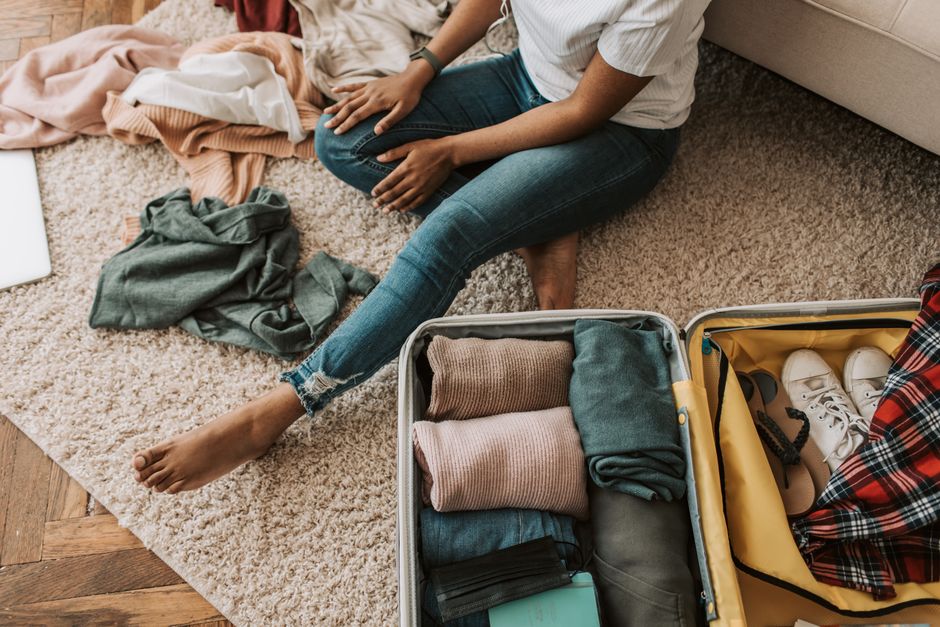
Count the days between opportunities to wash clothes, rather than assigning a different outfit to every day away. If you can do laundry halfway through a week, you can repeat a small set of pieces. Confirm what your accommodation offers before relying on a washing machine or a same-day laundry service.
A useful starting point is three tops, two bottoms and one optional dress, with underwear adjusted to the washing interval. Add a light layer for cool carriages and evenings, sleepwear and weather protection that suits your route. Treat this as a starting point to edit around your plans, not a compulsory capsule wardrobe.
Make every outfit easy to repeat
Lay out the bottoms first, then choose tops that work with both. For example, navy trousers and a patterned skirt might each suit a white shirt, a plain vest and a striped tee. Wear the bulkiest comfortable shoes for travelling and add a second pair only if it serves a clear purpose.
Think about drying time as well as washing. A thick cotton garment may remain damp after a quick sink wash, especially in a room with little airflow. Allow a proper drying window before moving on, and never assume you can put wet clothes into the case just before checkout without consequences for everything around them.
Use one small packing cube for underwear and another for clothing if that helps you find things. Stop adding organisers once they create more layers to unpack than they save.
Keep Journey Essentials in One Accessible Pouch
Imagine getting to your seat and needing your ticket, headphones and charging cable within the first few minutes. Those belong in your personal bag, not underneath a stack of clothes. A single pouch gives the little items a home and lets you move them together when you change trains.
Include a charging cable that fits your devices, a compact power bank if you use one, headphones, tissues and any small items you reach for regularly. Keep medication you need during the journey accessible in appropriate packaging. Store identification and payment cards in a secure part of your personal bag rather than in an unattended suitcase.
Save tickets and key journey details for offline access where possible. Make sure you can read the departure time, carriage information and accommodation address even when your connection disappears. A phone with plenty of battery is much more useful than several chargers buried in different pockets.
Give the pouch a permanent place throughout the trip. After each change, check that it is back there. You can take out what you need at your seat without spreading your belongings across the table or opening the suitcase in the aisle.

Separate Liquids, Snacks and Damp Items
Contain anything that could leak before it goes near your clothes. Choose bottles with secure lids and place toiletries in a washable bag that can contain small spills. Take the amount you expect to use, while keeping original packaging where it matters for identification or instructions.
Pack a refillable water bottle upright in a suitable pocket and close it carefully after each use. Choose snacks that tolerate being carried, such as an apple, crackers or a small portion of nuts. Foods that need chilling belong in an appropriate insulated bag with cold packs, not loose beside your travel documents.
A spare bag for wet swimwear or a damp cloth prevents moisture spreading through the case during a transfer. It is temporary containment: unpack and dry those items when you arrive. Likewise, give worn clothes a separate lightweight bag so you can see how much clean clothing remains.
Shoes deserve their own barrier, too. A simple washable shoe bag keeps soles away from fabric without needing a rigid compartment. Tuck small, clean items inside packed shoes only when doing so will not stretch or distort them.
Rehearse the Journey Before Departure
Once everything is packed, walk around with the exact combination of bags you plan to take. Include a few steps if you can manage them safely, a doorway and a short stretch outside. Notice whether the case pulls comfortably and whether your second bag gets in the way when you lift it.
Then practise the ordinary jobs: taking out your ticket, finding water and putting a layer away. If one of those requires opening the main case, move the item now. If you need a free hand and cannot find one, reduce the number of separate things you are carrying.
Remove the items that survived packing only because there was room. An extra pair of shoes or a bulky book may be the difference between an easy transfer and a tiring one. Leave the finished case by the door with your travel outfit ready, and start the journey knowing that you can manage what you have brought.